
← The Glow GuideHub · 1 pieceself-tan science.
self-tan science.
the authority hub. DHA, SPF, ingredients, safety.
DHA has been used in topical self tan since 1977. Fifty years of dermatological research sit behind the active in every modern formula. This hub explains the chemistry, the safety profile, the interactions with skincare actives, and the legitimate cases where caution applies.
Reviewed by our consulting dermatologist Dr Marion Cole. Updated quarterly.
Last reviewed 18 May
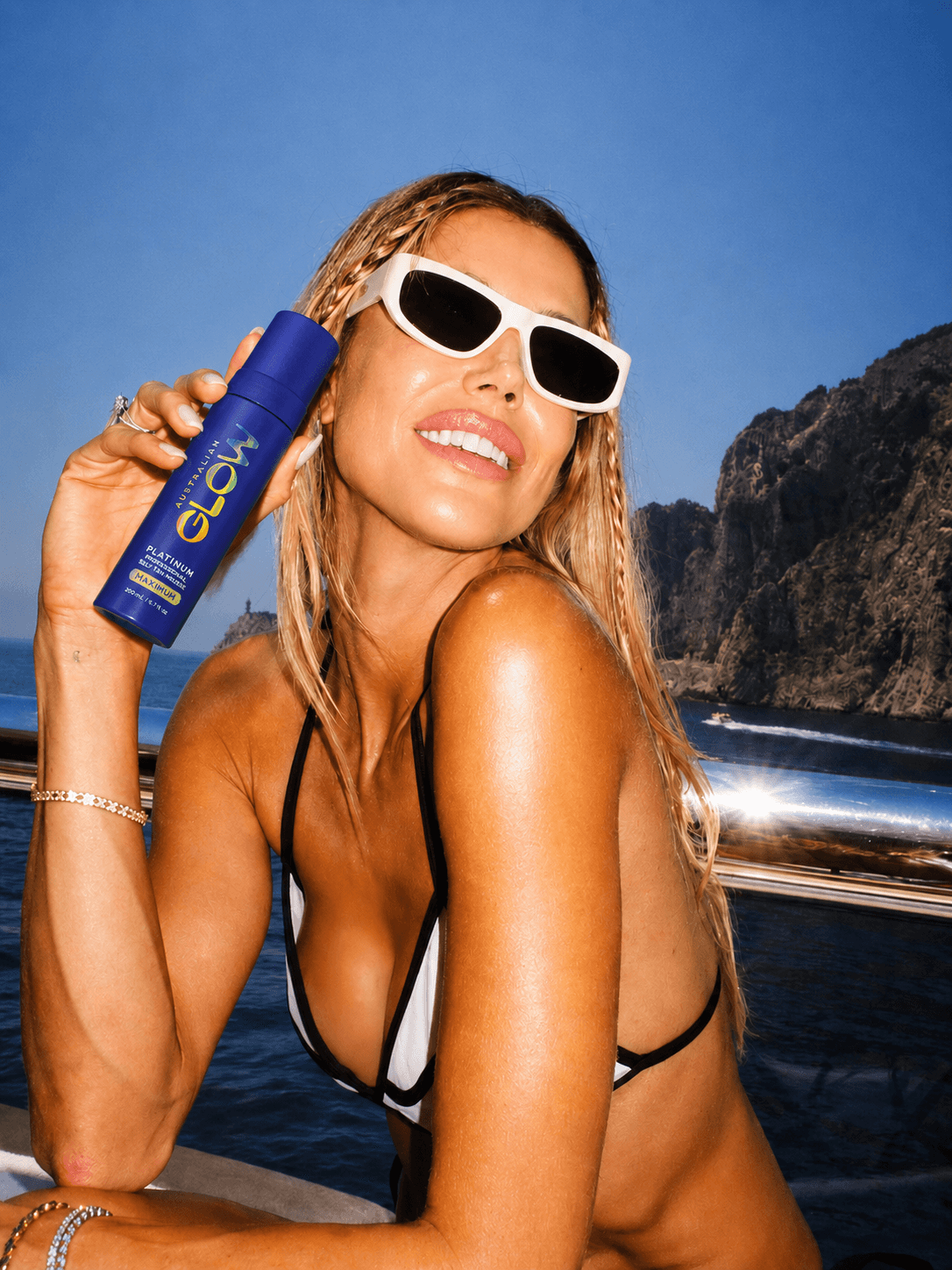
- DHADHA (dihydroxyacetone) is a colourless sugar that reacts with amino acids in the outermost layer of the skin to produce a temporary bronze colour. It is the active ingredient in nearly every modern self tan.
- OxidationOxidation is the chemical reaction between DHA and amino acids in the skin that produces the visible bronze colour of a developed self tan.
- Skin pHSkin pH is the acid–alkaline balance of the surface layer of skin, typically sitting between 4.5 and 5.5 on healthy skin.
- SPFSPF (Sun Protection Factor) is a measure of how well a sunscreen protects skin from UVB radiation, expressed as a number from 15 to 50+.
- SPF 50+SPF 50+ is a sunscreen rating that blocks approximately 98% of UVB radiation, the highest commercial SPF standard in Australia.
- Broad-SpectrumBroad-spectrum describes a sunscreen that protects against both UVA (ageing) and UVB (burning) radiation.
- RetinolRetinol is a vitamin A derivative used in skincare to accelerate cell turnover, reduce fine lines, and improve skin texture.
- Pregnancy-SafePregnancy-safe describes a cosmetic product whose ingredients are considered safe for topical use during pregnancy by major obstetric guidelines.