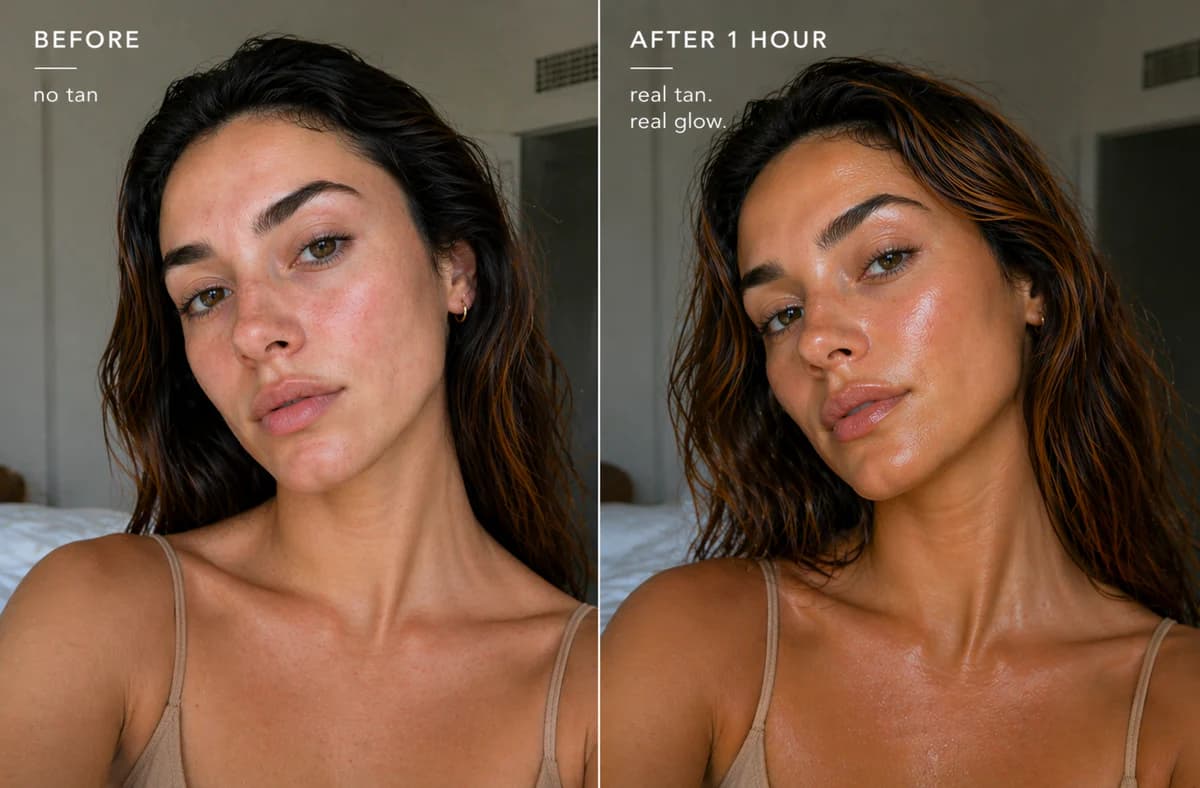
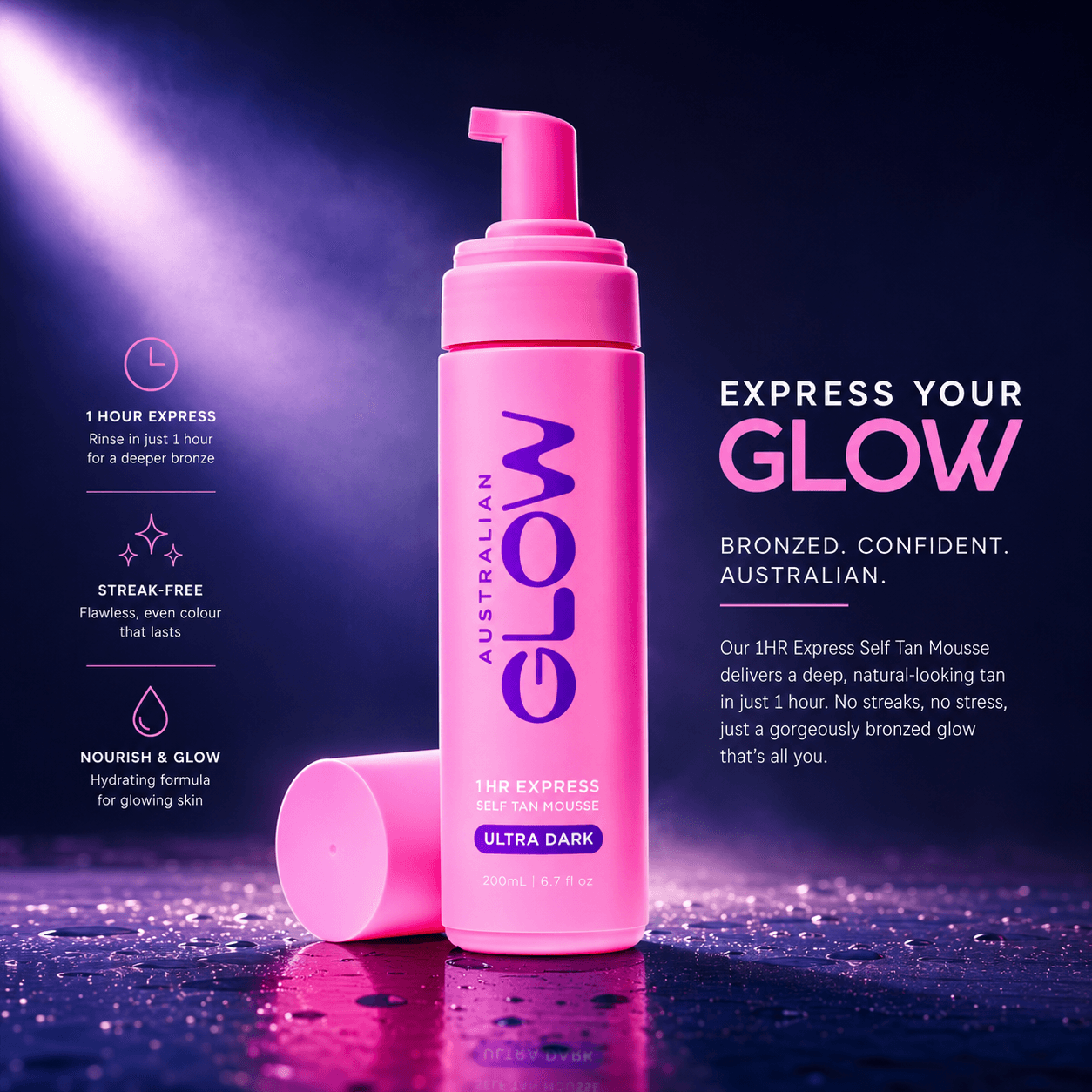
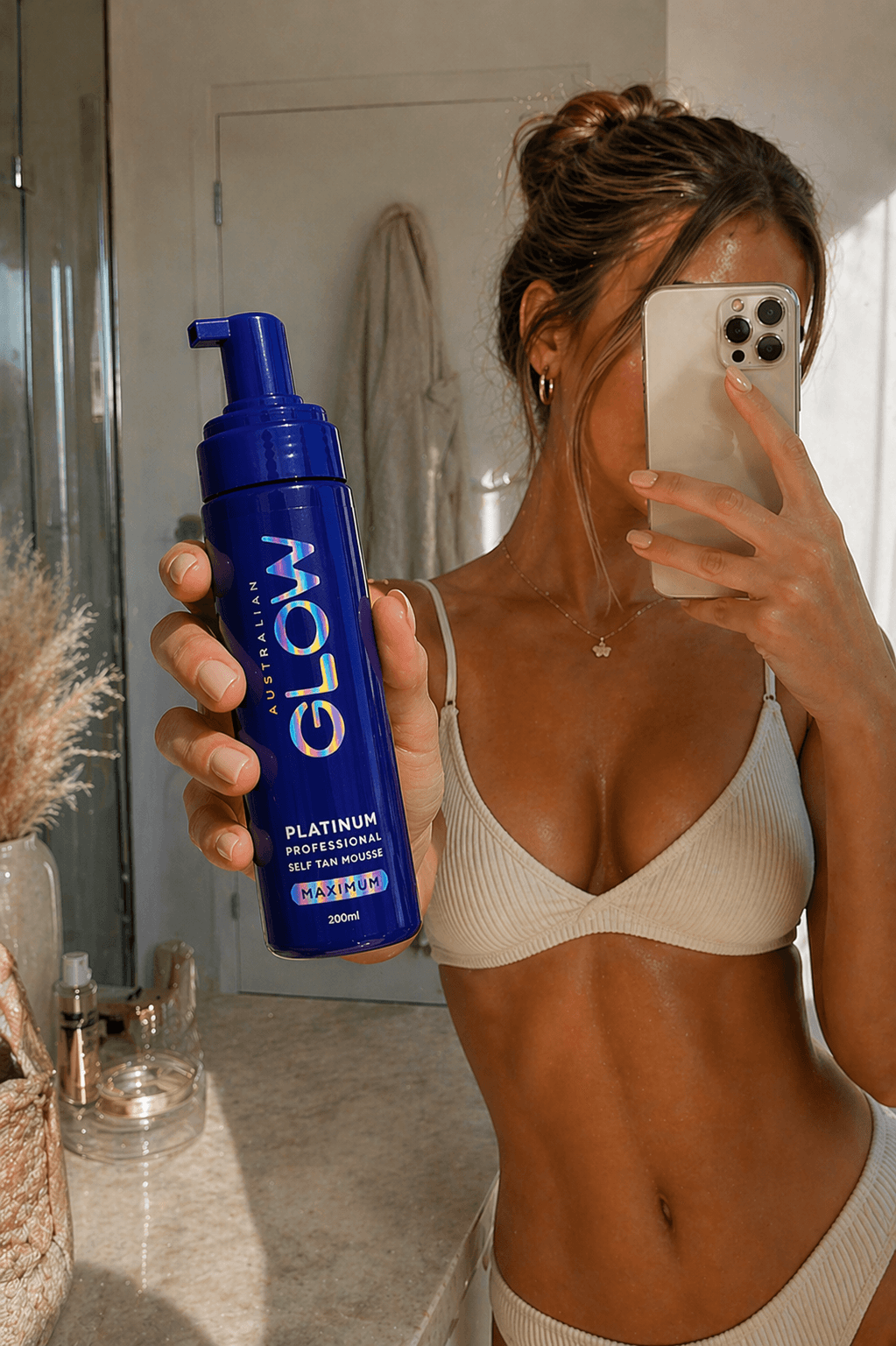
pick your shade.
the decision hub. light, medium, dark or ultra dark?
Picking the wrong shade is the single biggest reason self tan ends up in the bin. Too dark for fair skin reads orange; too light for olive skin disappears entirely. This hub is the honest comparison — every Australian Glow shade, every skin tone.
Start with the shade picker if you’re deciding between two formulas you already know. Take the 60-second shade quiz if you don’t. Or go straight to the matrix at /shade-match where every shade × skin tone combination has its own verdict and real before-and-afters.
Last reviewed 18 May
every piece in this hub.
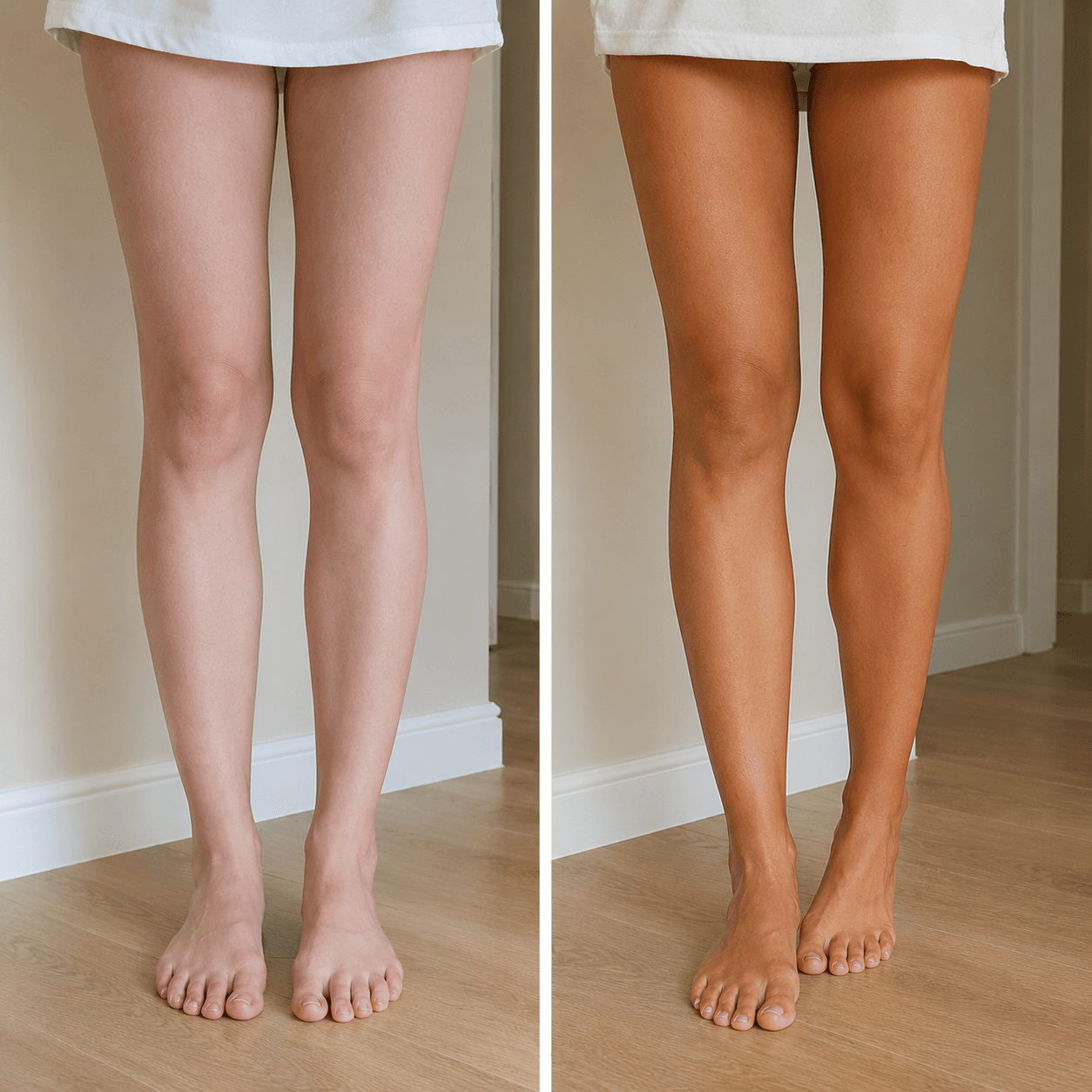
Which Australian Glow Shade Is Right For Me? An Honest Comparison
Light, Medium, Dark or Ultra Dark — with develop time, finish, fade and real before-and-afters across skin tones.
Read · Mara OkelloFind Your Perfect Self-Tan Shade
Medium, dark, or ultra-dark? An honest guide to picking your shade.
Read · Mara Okello- Fitzpatrick ScaleThe Fitzpatrick Scale is a dermatological classification of skin types from I (very fair, always burns) to VI (deeply pigmented, never burns).
- UndertoneUndertone is the underlying hue of your skin — cool (pink/blue), warm (yellow/gold) or neutral — visible under the surface colour.
- Cool UndertoneA cool undertone is skin with pink, red or bluish underlying hues, visible at the wrist or jawline in natural light.
- Warm UndertoneA warm undertone is skin with yellow, golden or olive underlying hues, visible at the wrist or jawline in natural light.
- Neutral UndertoneA neutral undertone is skin that does not lean cool or warm — a balanced mix visible at the wrist or jawline.
- DHA PercentageDHA percentage is the concentration of dihydroxyacetone in a self tan formula, usually between 4% and 12%, determining final tan depth.
Real results · from the library
Real Australian Glow studio results tagged to this hub — unretouched, dated, with shade + develop time on every card.